We assist small businesses to define and refine their processes, plan and build their web presence using current and emerging technologies.
We provide ongoing support and advice to assist businesses to
maintain and grow a crucial path to market and focus on growing your business

In my experience, failing to develop your branding early in the business setup process can be extremely harmful. That failure tends to result in a lack of 'brand recognition' for the business and the marketing person having to scramble to create new material time and time again.
Setting the branding of your business early means that you can more readily develop the recognition of your business, it makes developing marketing materials easier and it means that developing things like your website and social media presence become consistent.
So, why do businesses fail to set their branding on startup? Sometimes it's because they don't know they need to. Sometimes it's because they don't know HOW to or who can help them. But most times, unfortunately, it's seen as being 'too' expensive to do.
That last point can be valid, if you go about it the wrong way or speak to the wrong people. Let's touch on that second point first.
Some organisations can be quite costly to deal with - they do a FANTASTIC, top tier job and they work with large organisations. Whilst this organisations are good, I wouldn't recommend that they are appropriate for a startup. Startups have very different marketing budgets.
Finding the right organisation or person to work with, is key in this case.
Another reason that getting your branding organised can be expensive is there isn't a clear idea on who the Target Audience is and WHAT message is being conveyed.
Getting these two things nailed down first is also key.
Once you've got those two things sorted out, you absolutely should get a basic brand kit developed.
What's in a basic brand kit? A logo, the colours that represent your business (and their codes) and the fonts to use. Typically, the colours and fonts will be decided by the logo, which is why getting a logo is helpful.
But logos cost so much money!! Yes, they can. Or at least, it can seem that way. There are many talented individuals in the freelance world who have great packages for a 'startup' logo that shouldn't break the bank. However, in this case, it's one expense I highly recommend you incur.
By creating your logo, and by flow on getting your colours and fonts, you can create a consistent marketing message that looks professional. And by that, I mean it doesn't look like you've found a piece of clip art (am I dating myself here?) and stuck in a graphics editing package. A professionally developed logo will show that you are serious about your business and here for the long run.
I've already covered a few things to consider when developing your branding:
1. Make sure you know who your Target Audience is
2. Make sure you know what your message is
There's a couple of others that I'd like to highlight as well, most relate to engaging a designer.
1. Ensure that you will get the rights to the work they create.
2. Ensure that you will get the source files to your logo. Your webdesigner and other graphics people will most likely need the original files to be able to do their work
3. Ensure that the artwork is given in a large format. You don't want to get your logo at 300px by 300px in size, 150dpi. You want high resolution, large format so you can resize it as needed.
4. Make suire that any fornts used are accessible to you and usable on the web. If a licence is needed, be sure you have that licence and you know what it costs.
5. Lastly, I like to make sure that I get artwork that includes the text for my business and a set that has just the logo only.
There's probably things that I've missed, but those are the big ones.
Lastly! Having gone through the process of devleoping your branding ... USE IT! Don't just put it in a folder on your computer - make it part of your business. Create letterhead and document templates with the styles to match it etc etc etc.
Have you gone through the process of creating your branding? Do you have the artwork for your logo in formats that you can use or pass off to others who will develop material for your business?
Life is busy and there's just so many things to remember. What tools do you use to help you keep on top of ALL the things?
It's easy to react or respond quickly to messages and the like. It's better to do that mindfully. That's why I try to Practice The Pause.
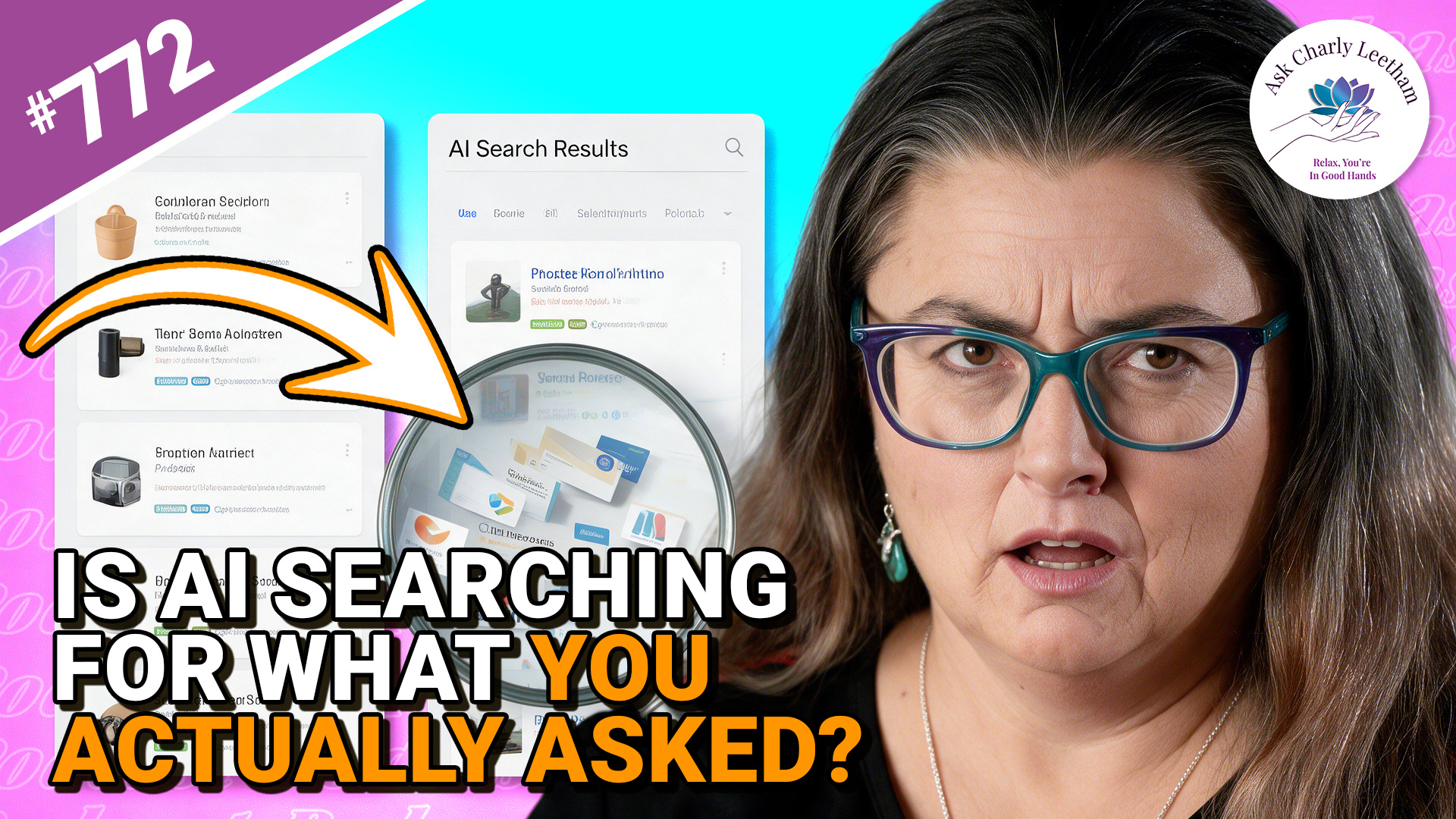
Do you use your AI Chat as a glorified search engine? Many of us do because it's an effective way to collate data and analyse it. What happens when you ask for information, your AI "interprets" the request differently and presents you with a confident answer?
That's what Charly discusses in todays episode.
✅ A confident answer can still be answering the wrong question
➡️ The shortlist may have been narrowed before you ever see it
⚡ Checking what the AI searched for can be as important as checking its answer
When you ask AI to search the web, how certain are you that it’s searching for what you asked? The answer may look convincing, yet the search behind it can take your request somewhere you never intended.
There's an interesting lesson here for Business Owners.
Book a Free 30 minute Breakthrough Session: https://askcharlyleetham.com/book-me
(1 per person only)
Follow us:
Locals: https://askcharlyleetham.locals.com
Rumble: https://rumble.com/askcharlyleetham
Odyssey: ...
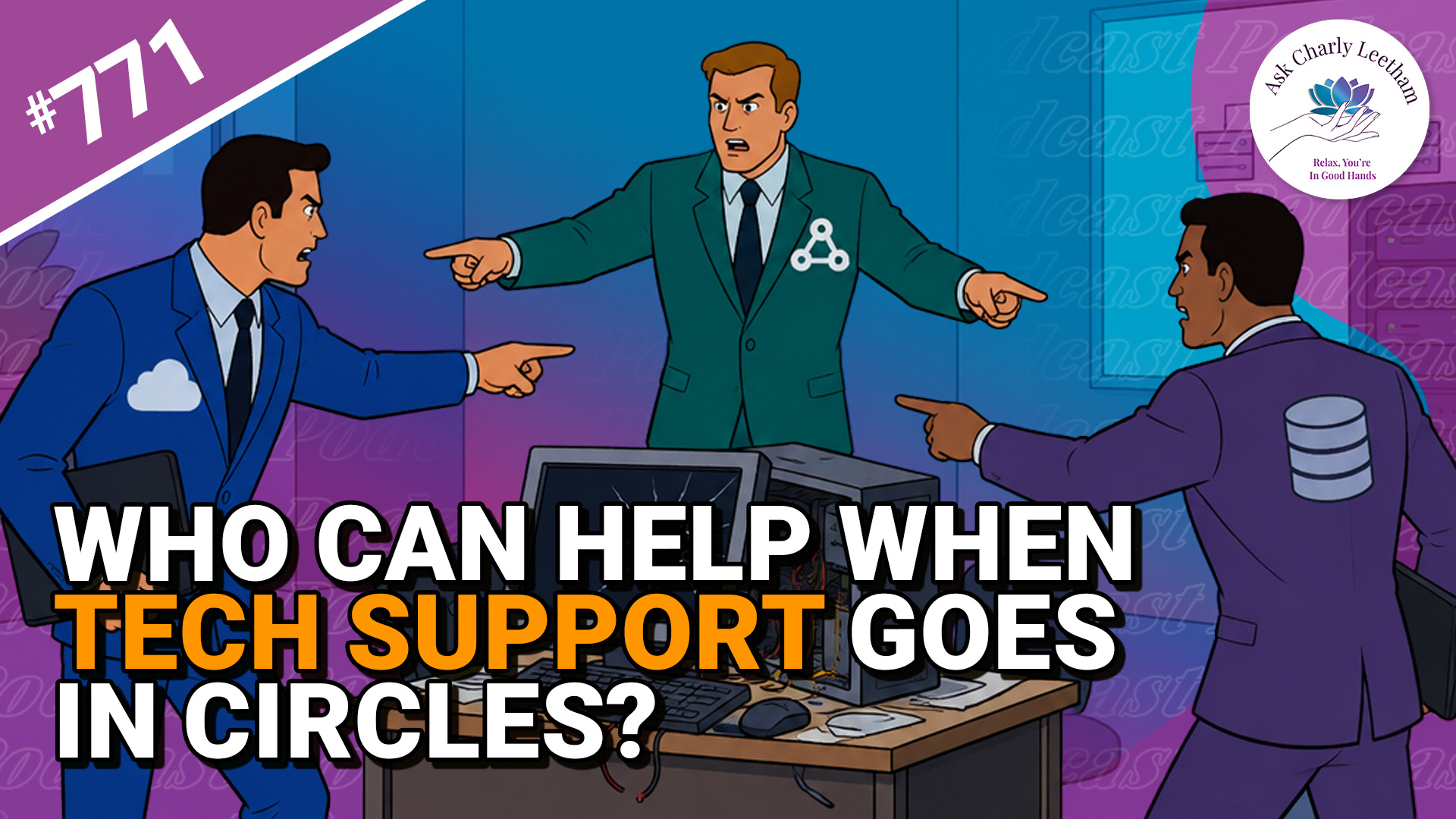
Business systems are complex and when something goes wrong, trying to work out what it is and how to fix can be an exercise in futility. It becomes even more frustrating when there are multiple providers involved and each say their system is working correctly.
Todays episode discusses that and asks four questions:
✅ Why is it so difficult to identify where the problem sits?
➡️ What do you need to do?
⚡ How can you get out of the cycle?
⭐ What can the business do while the underlying problem is being resolved?
Have you got a technology problem that still exists because nobody can tell you where it sits?
Book a Free 30 minute Breakthrough Session: https://askcharlyleetham.com/book-me
(1 per person only)
Follow us:
Locals: https://askcharlyleetham.locals.com
Rumble: https://rumble.com/askcharlyleetham
Odyssey: https://odysee.com/@askcharlyleetham:4
YouTube: https://youtube.com/askcharlyleetham
Facebook: https://www.facebook.com/askcharlyleetham
Twitter: ...
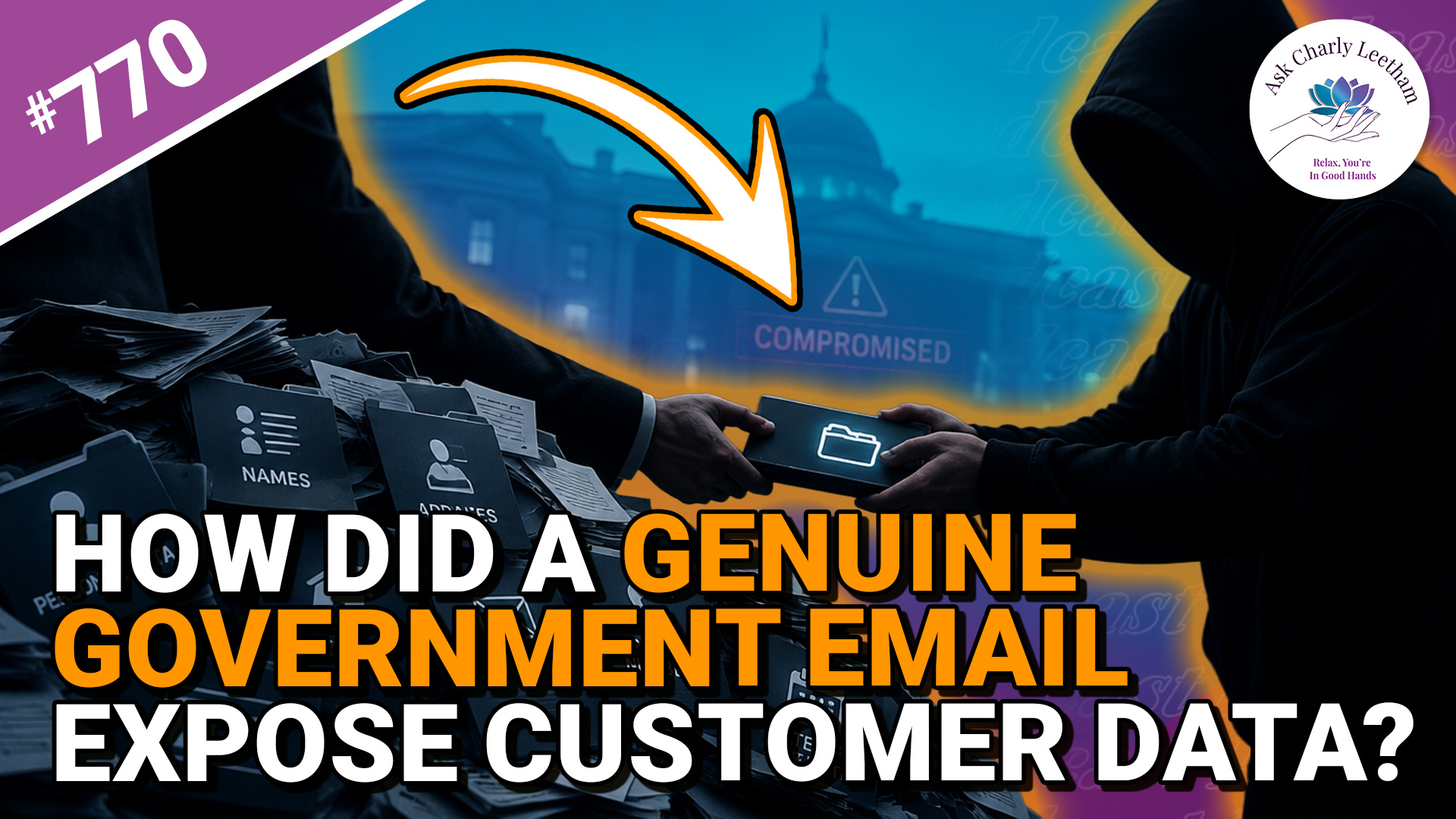
Revolut handed approximately 680 customers’ personal information to a bad actor after receiving requests from a compromised Italian government account that appeared lawful.
It appears the company wasn’t hacked, and the emails passed the checks designed to confirm where they came from. Today's episode discusses:
✅ Why Revolut handed the information over
➡️ The legal and regulatory environment that set the incident up
⚡ What it means for the security and privacy of information businesses are required to collect
⭐ What small businesses need to take from it
There are lessons here for businesses, particularly those now covered by expanded Australian anti-money laundering requirements.
If your business collects sensitive customer information, find out what this incident means for you.
Book a Free 30 minute Breakthrough Session: https://askcharlyleetham.com/book-me
(1 per person only)
Follow us:
Locals: https://askcharlyleetham.locals.com
Rumble: https://rumble.com/askcharlyleetham
...